
When a company has an open position, one of the first steps is typically to post the job and start collecting applications. But what happens when the right candidates aren’t applying?
This is where understanding the difference between traditional recruiting and headhunting becomes important. While the terms are often used interchangeably, these two approaches have distinct methods for identifying and attracting qualified talent.
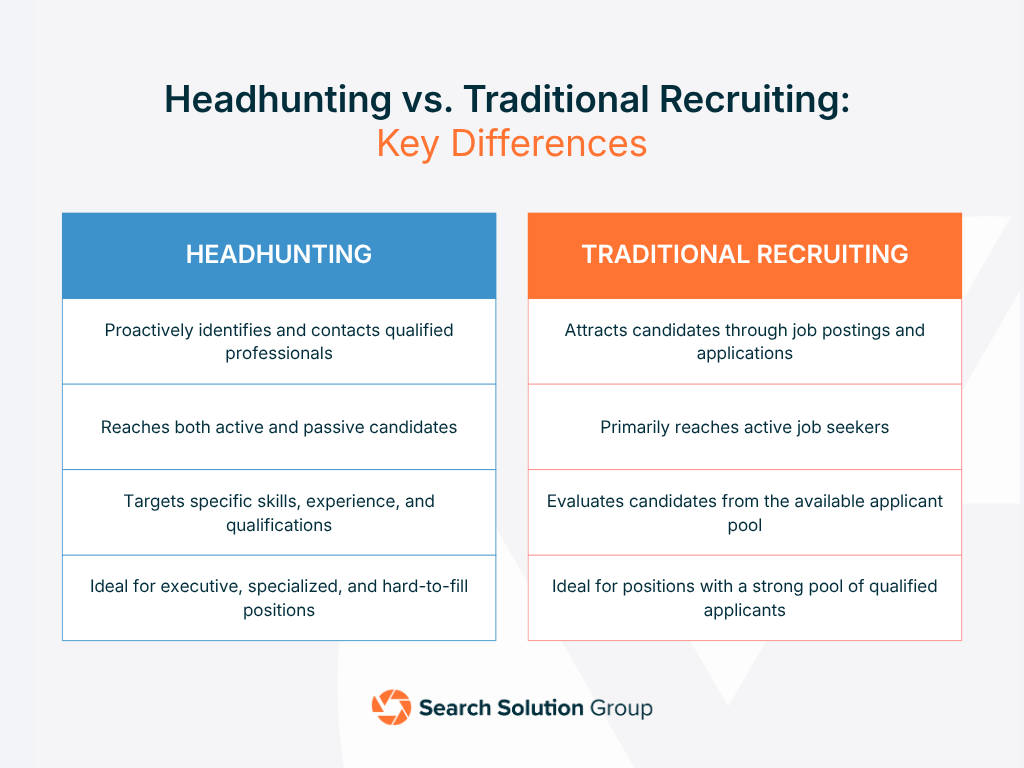
Traditional recruiting typically focuses on connecting employers with candidates who are actively searching for new opportunities. Headhunting, on the other hand, takes a more proactive approach by identifying and reaching out to qualified professionals, including those who may not be actively looking for a new position.
Both approaches play an important role in the hiring process, but knowing when to use each can make a significant difference in finding the right talent for your organization.
How Does Recruiting Work?
Traditional recruiting connects job seekers actively looking for new opportunities with companies looking to fill open positions. Recruitment can be done through a combination of channels: a company’s career page, job boards, LinkedIn, and employee referrals.
Recruiters then review applications and evaluate candidates through screenings and interviews, moving qualified candidates through the hiring process. The traditional recruiting process can be highly effective for positions that attract a large number of qualified candidates.
The limitation with recruiting is that results often depend on the right candidate finding the opportunity. If a qualified professional who aligns perfectly with the job description isn’t searching job boards, updating their resume, or actively applying, they may never come across the role.
What is Headhunting?
Instead of waiting for the right candidate to apply, headhunting takes a direct approach to finding the right candidate and brings them to you. Employment headhunters proactively identify professionals whose experience, skills, industry knowledge, and career history align with the requirements of the position.
Once the headhunter identifies potential candidates who are a good fit, they contact them directly, introduce the opportunity, and discuss whether they would consider making a move. This targeted headhunting approach lets companies access professionals who may be the perfect fit but are employed and have no plans to apply for other opportunities.
This is one of the biggest differences between employment headhunting and traditional recruiting. Recruitment is designed to attract job seekers to roles. Headhunting is an active search for the right candidate, even if they aren’t easily accessible.
Headhunting vs. Traditional Recruiting
Ultimately, these two hiring services have the same goal: finding the right person for the job. One service isn’t better than the other, but one service is a better fit for your needs.
Why Passive Candidates Matter
A passive candidate is someone who is not actively job searching, but may be open to the right opportunity. These individuals may already be performing a similar role successfully at another company, working within a competitor’s organization, or bringing the exact industry experience an employer needs.
One of the biggest advantages of headhunting is the ability to reach these passive candidates. While they may not be browsing job boards or submitting applications, they could be willing to consider a new opportunity when approached directly by a headhunter.
This is why it’s important to understand the difference between the applicant market and the broader talent market. The applicant market consists of professionals actively applying for jobs, while the talent market includes both active job seekers and qualified professionals who aren’t currently searching for a new position.
Headhunting allows employers to reach both groups, expanding the pool of potential candidates beyond those who are actively applying.
When Does Headhunting Make Sense?
Not every position requires a headhunter. If an open role is attracting a strong pool of qualified applicants, traditional recruiting methods may be enough to make a successful hire.
Headhunting is especially useful when a company is hiring for executive and leadership positions, highly specialized roles, difficult-to-fill positions, confidential job searches, or jobs requiring very specific skills or industry experience.
In these situations, generating more applications may not be the solution. Instead, a targeted headhunting approach allows companies to expand their search and connect with qualified professionals who may not have considered the opportunity otherwise.
Search Solution Group Finds the Right Hire, Not Just a Hire
At Search Solution Group, we combine traditional recruiting methods with targeted headhunting to help our clients identify and hire qualified professionals.
Rather than relying solely on job postings and inbound applications, our recruiters actively search the market for candidates who match the specific requirements of each position. By leveraging proactive headhunting, traditional recruitment channels, and our network of more than 1.6 million professionals, we help companies connect with qualified talent nationwide.
Finding the Right Candidate Requires the Right Approach
Traditional recruiting and headhunting are both important and valuable hiring methods. The right approach for you depends on a variety of factors: the position, the available talent pool, and how difficult the right candidates are to reach.
For many high-level or hard-to-fill positions, relying on the right person to see your posting and apply can be very limiting. Targeted headhunting allows companies to look beyond the resumes that come to them and go to the right candidates without doing any of the heavy lifting. Our recruiters don’t just bring you the candidates; we also handle the initial outreach, screening, and vetting process before presenting candidates to our clients.
Not sure which recruiting approach is right for your organization? Connect with a Search Solution Group hiring expert to discuss your hiring needs.