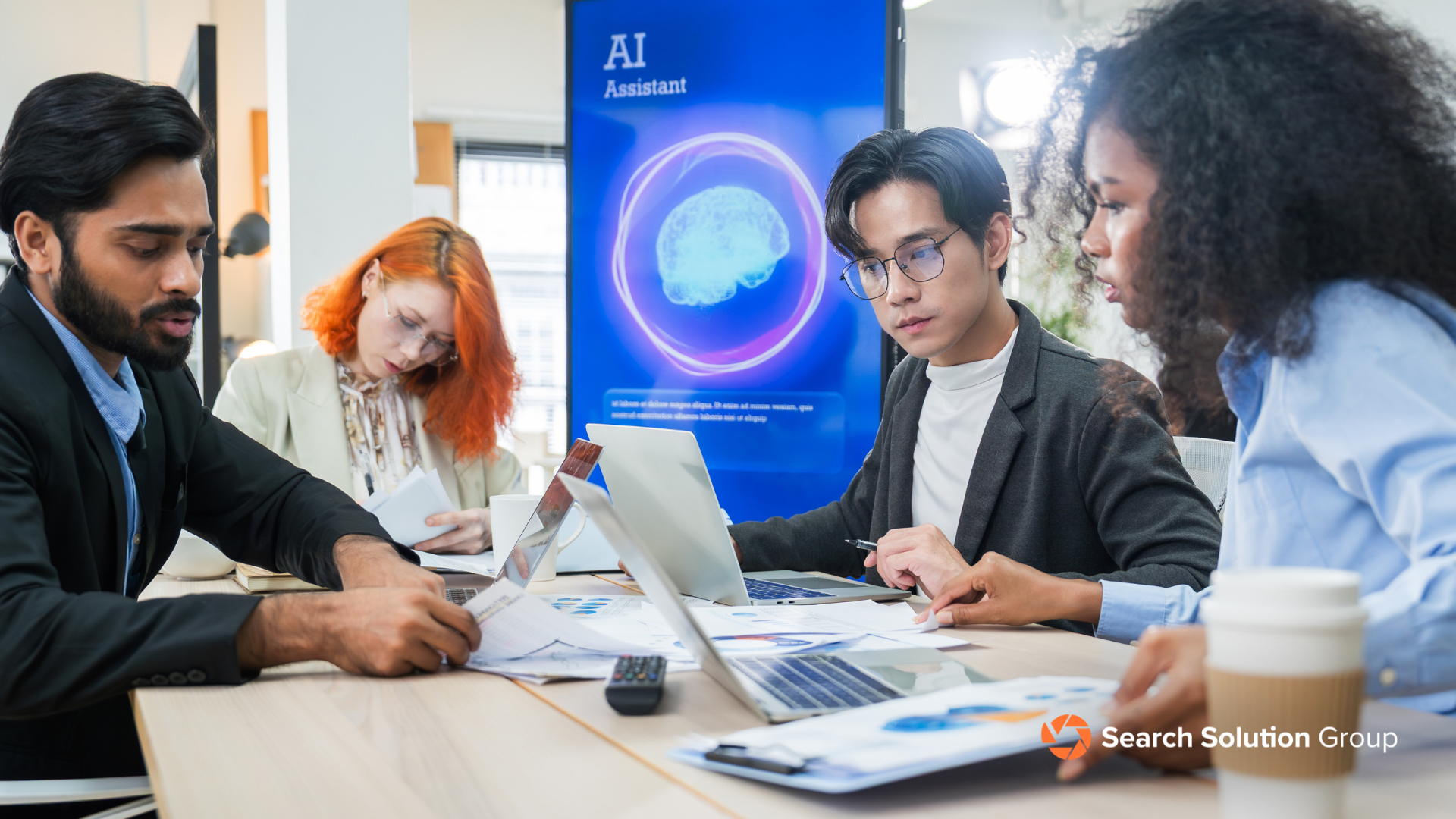
AI has become an integral part of organizations across a variety of fields, including healthcare, manufacturing, financial services, and other industries. Investing in AI today can streamline your workflows, improve team productivity, and create opportunities for better efficiency.
So, how can you start integrating AI into your organization?
Building an AI team requires more than hiring a single technical expert. An AI recruitment firm can help you identify the right combination of talent that your organization needs to support long-term AI adoption.
Many organizations take the wrong approach to AI implementation by only hiring one technical expert and expecting them to drive innovation alone. Successful AI adoption requires a team of certified experts leveraging combined talents across technology, business, and governance, so that your AI investments actually deliver measurable results.
Why Building an AI Team Requires More Than One Role
AI initiatives involve data, engineering, operations, and business strategy. No single person can effectively manage every aspect of implementation. Different roles contribute at different stages of AI maturity, and the right mix depends on your goals, industry, and existing infrastructure.
Think about it this way: you wouldn’t ask one person to run your finance department, sales team, and HR function. AI adoption is no different. It requires different skill sets working together toward the same goal.
Core AI Roles Companies Need for AI Adoption
While some organizations may need every role right away, understanding the core functions behind building successful AI systems can help you prioritize the technical talent you need to start building your AI team and the frameworks that support your goals.
- AI Engineers develop and roll out AI applications and automation solutions.
- Data Engineers build the platforms that power AI systems.
- Data Scientists specialize in providing decision support by building predictive models and generating insights.
- Machine Learning Engineers handle the development, training, optimization, and maintenance to improve the models.
- AI Solutions Architects design the systems that tie everything together and strategize implementation to align with overall business goals.
- MLOps Engineers are responsible for the stability, security, and efficiency of the AI systems
- AI Product Managers bridge both the technical teams and business stakeholders.
- Generative AI Specialists develop practical use cases and optimize AI outputs
- AI Governance and Transformation Leaders support compliance, security, and governance for the company
Additional AI Roles Are Emerging Across Functions
As professional AI use grows, organizations are creating more AI-focused roles across all departments. Companies are expanding their AI talent in leadership, HR, sales, marketing, and revenue operations, depending on what they’re trying to accomplish.
AI Leadership Roles
When building AI systems, it is important to establish a leadership team to ensure project oversight, manage risks, and ensure alignment across the organization.
Common leadership roles include: Chief AI Officer, VP of AI Strategy, Director of AI Transformation, and AI Program Manager.
HR and People Operations Roles
More HR teams are developing specialized roles to assist in the use of AI for workforce planning, talent intelligence, and HR technology initiatives.
Some of the common leadership roles include Chief AI Officer, VP of AI Strategy, Director of AI Transformation, and AI Program Manager.
Sales and Customer Success Roles
As organizations bring AI products and services to market, they often add customer-facing roles that support business development, adoption, and long-term success.
Examples of these roles include: AI Sales Specialist, AI Solutions Consultant, AI Account Executive, AI SaaS Sales Executive, AI Adoption Specialist, AI Business Development Representative, and other roles.
Marketing and Revenue Operations Roles
Marketing and revenue teams are also leveraging AI to improve automation, demand generation, and customer engagement. Common roles include: AI Marketing Manager, Marketing Automation Manager, Revenue Operations Manager, AI Content Strategist, and CRM and Automation Manager.
Which AI Roles Should You Hire First?
Your hiring strategy should be customized and specific to where your organization is in the process of AI adoption and development. Hiring priorities should evolve as your AI initiatives and goals mature and become more integrated across the organization.
Establishing an AI Strategy
Organizations beginning their AI journey often start with executive and strategic leadership roles that help define priorities, identify use cases, and align AI initiatives with business goals. Common roles include:
- Chief AI Officer (CAIO)
- VP of AI Strategy
- AI Program Manager
- AI Product Manager
- AI Solutions Consultant
Scaling AI Across the Organization
Enterprise AI adoption often requires specialized leadership and support functions to ensure AI initiatives remain secure, scalable, and aligned with long-term business objectives. Organizations commonly add:
- AI Governance and Transformation Leaders
- MLOps Engineer
- AI Customer Success Manager
- AI Enablement Specialist
- AI HR Transformation Director
- Revenue Operations Manager
Signs Your Company Is Ready to Build an AI Team
Creating new AI tools and systems involves a lot of experimentation as you find what works. Once you are past the discovery phase and are ready to expand, it is important to develop a dedicated team with the expertise needed to scale.
Organizations often begin building AI teams when AI moves from experimentation to a strategic business initiative. If your team is automating processes, asking for better analytical and forecasting tools, and integrating AI into their own workflows, your team is ready to dive into the deep end with AI. Building a team to better support overall AI usage across the organization not only shows your company’s innovation and growth-driven approach, but it also establishes guidelines and oversight for AI.
How to Get Started With AI Hiring
There is no one-size-fits-all AI team. The right combination of talent depends on your business goals, industry, and stage of AI adoption.
Working with a specialized AI recruitment firm can help you secure the talent needed to turn AI initiatives into measurable business results. Whether you are still at the idea stage or ready to build an entire AI function from the ground up, Search Solution Group is experienced in identifying, attracting, and hiring the AI talent you need to build a high-performing AI team.